There is a specific kind of silence that you only find in the mountains of Northern Vietnam. It isn’t just the absence of noise; it’s a heavy, ancient stillness that makes you want to lower your voice out of respect for the land itself.
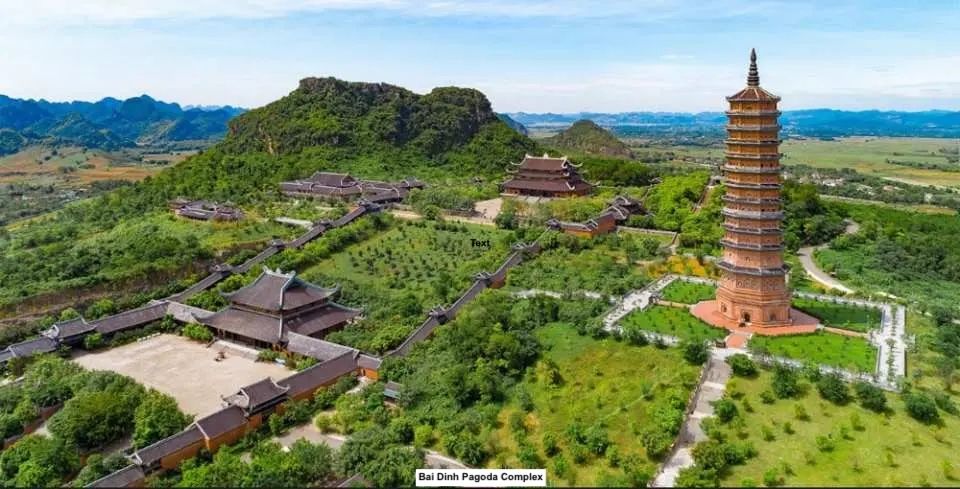
When I first caught sight of the Bai Dinh Pagoda complex, rising like a dream out of the limestone karsts of Ninh Binh, I realized that words like "big" or "massive" don't quite do it justice. Spanning over 700 hectares, this isn't just a temple; it’s a spiritual city. Whether you’re a devout Buddhist, a history buff, or just a traveler looking for that perfect, mist-shrouded mountain view, Bai Dinh is a place that demands a full day of your life.
In this guide, I’m taking you through everything you need to know about visiting Bai Dinh in 2026 - from the hidden corners of the ancient caves to the record-breaking heights of the new stupa.
Why Bai Dinh Matters: More Than Just Records
In the travel world, Bai Dinh is often introduced by its "stats." It has the largest bronze Buddha in Southeast Asia. It has the longest Arhat corridor in Asia. It has the largest bronze bell in Vietnam.
But if you only visit for the records, you’re missing the point.
Bai Dinh is a bridge between two eras. On one side, you have the Ancient Pagoda, tucked away in a quiet mountain cave where monks have prayed for over a thousand years. On the other, you have the New Complex, a masterpiece of modern Vietnamese craftsmanship that was built to show the world that the country’s spiritual heart is beating stronger than ever.
Walking through the grounds, you feel the weight of the Ly and Dinh dynasties. This region, Hoa Lu, was the ancient capital of Vietnam. Every stone here feels like it’s trying to tell you a story about kings, national heroes, and the enduring quest for inner peace.
The Journey Begins: Entering the Tam Quan Gate
Your journey usually starts at the parking area, where you’ll likely hop on an electric shuttle (Xe Dien). Trust me on this: take the shuttle. The complex is huge, and you’ll want to save your leg strength for the thousands of steps you’re about to climb inside.
As the shuttle drops you off, you’re greeted by the Tam Quan Gate (The Three-Entrance Gate). In Vietnamese architecture, these gates represent the three ways of looking at the world: "emptiness," "temporariness," and "the middle way."
The gate itself is a marvel of ironwood and traditional dark tiles. It smells of aged wood and incense. Stand there for a moment and look up at the intricate carvings - you’ll see dragons, phoenixes, and lotus flowers, all symbols of protection and purity in Vietnamese culture.
Walking the Arhat Corridor: 500 Faces of Humanity
Once you pass the gate, you enter what I consider the most fascinating part of the entire complex: the Arhat Corridor.
Imagine two long, covered walkways stretching for nearly three kilometers. Along these corridors are 500 life-sized statues of Arhats (enlightened Buddhist saints), each carved from solid blue stone.
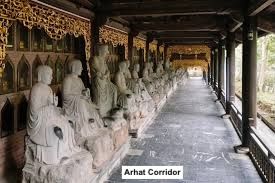
What makes this human and "real" is that no two statues are the same. Some are laughing, some look stern, some are meditating, and some look like they’re in the middle of a deep, philosophical argument. Local guides will tell you that the statues represent every possible human emotion and state of being.
A Human Touch: You’ll notice that many of the statues have shiny knees or hands. This is because locals and pilgrims rub them for good luck. While the signs might discourage it to preserve the stone, it’s a testament to how "alive" this place feels to the people who visit. It isn't a museum; it’s a living, breathing site of faith.
The Bell Tower: A Resonance That Fills the Valley
As you continue your climb, you’ll reach the Bell Tower. Built in an octagonal shape with three layers of curved roofs, it looks like a lotus blooming out of the hillside.
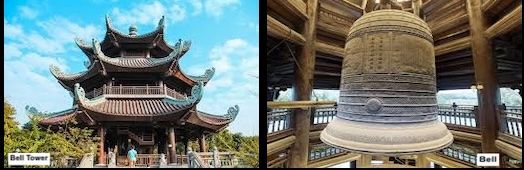
Inside hangs the 36-ton Great Bronze Bell. When this bell is struck, the sound is said to echo for miles, reaching the ears of the farmers in the surrounding rice paddies and the boatmen in Trang An. It is a call to mindfulness, a reminder to stay present. Underneath the bell is a giant bronze drum—another symbol of power and authority from Vietnam’s imperial past.
The Hall of Bodhisattva Avalokitesvara
Before you reach the main Buddha hall, you’ll find the temple dedicated to Quan Am (the Goddess of Mercy). Inside sits an 80-ton bronze statue of the goddess with a thousand hands and a thousand eyes.
The symbolism here is beautiful: she has a thousand hands to help those in need and a thousand eyes to see the suffering of the world. Even if you aren't religious, the sheer craftsmanship of the gold-leafed bronze against the dark wood of the hall is enough to take your breath away. The air here is thick with the scent of sandalwood, and the light filters through the doors in a way that feels almost cinematic.
The Phap Chu Hall: Where Scale Meets Serenity
This is the "big one." The Phap Chu Hall houses the massive bronze statue of Shakyamuni Buddha. At 10 meters tall and weighing 100 tons, it is a sight to behold.
But what I loved most wasn't just the statue. It was the environment. The hall is built with massive pillars made of ironwood, and the ceiling is decorated with traditional motifs. Despite the crowds, the height of the ceiling creates an acoustic that swallows sound, making the hall feel surprisingly private and quiet.
Take a seat on one of the mats near the back. Just five minutes of sitting there, watching the sunlight hit the gold leaf on the Buddha’s face, is better than any meditation app you’ve got on your phone.
The Bao Thap Stupa: A View from the Heavens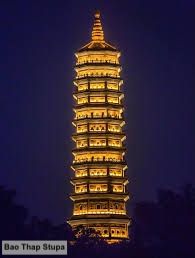
If you’ve seen photos of Bai Dinh on Instagram, you’ve likely seen the Bao Thap Stupa. Standing at 100 meters tall with 13 stories, it is the tallest Buddhist stupa in Southeast Asia.
While the walk up the stairs is an option for the brave, most visitors take the elevator to the top. When the doors open on the 13th floor, the wind hits you first. Then, the view. From here, the entire Bai Dinh complex unfolds below you like a map. You can see the curved roofs of the halls cutting through the mist, the winding river in the distance, and the jagged limestone peaks that make Ninh Binh the "Ha Long Bay on Land."
The walls inside the stupa are lined with thousands of small, gold-encrusted Buddha statues. It feels like being inside a golden honeycomb. Pro tip: Try to time your visit to the stupa for the late afternoon. As the sun begins to dip behind the karsts, the gold leaf inside the stupa glows with an intensity that feels otherworldly.
Crossing into the Past: The Ancient Bai Dinh Pagoda
Most tourists make the mistake of stopping after the Phap Chu Hall. Don’t be one of them. To find the "soul" of this place, you need to hike up about 300 stone steps toward the peak of Dinh Mountain.
This is the Ancient Bai Dinh Pagoda, founded by the high priest Nguyen Minh Khong in the 12th century. There are no massive bronze halls here. Instead, the "temples" are built directly into the mouths of caves.
The Light Cave and The Dark Cave
As you reach the top, the path splits:
- The Light Cave (Hang Sang): This cave is dedicated to the Buddhas and Gods. It’s airy, bright, and filled with the scent of fresh mountain air mixed with incense.
- The Dark Cave (Hang To): This is where things get mystical. As you step into the cool, damp darkness, you’ll see statues of "Mau" (Mother Goddesses) and fairies carved into the rock. The stalactites hanging from the ceiling drip water into stone basins, creating a rhythmic "plink-plink" that serves as the cave’s natural music.
There is something profoundly humbling about praying in a cave. It strips away the grandeur of the new complex and reminds you that for a thousand years, people climbed this exact mountain with nothing but faith and a few sticks of incense.
The Pearl Well (Gieng Ngoc)
On your way down from the ancient pagoda, look for the Pearl Well. It looks like a large, circular swimming pool surrounded by a stone railing, but its history is far more significant.
Legend says that the monk Nguyen Minh Khong used the water from this well to brew herbal medicine for the King and the local people. Despite being on a mountainside, the well has supposedly never run dry. The water is a deep, clear jade green. In 2026, the area around the well has been beautifully landscaped, making it a perfect spot to sit for a moment and hydrate (though maybe stick to your bottled water rather than the well!).
Practical Information: Planning Your Pilgrimage
Now that we’ve covered the "what," let’s talk about the "how." Bai Dinh is huge, and a poorly planned trip can lead to exhaustion.
1. How to Get There
- From Hanoi: Most travelers take a private car or a limousine bus. The journey takes about 2 to 2.5 hours via the CT01 highway.
- From Tam Coc/Trang An: If you are already staying in Ninh Binh, Bai Dinh is only about a 20-minute motorbike or taxi ride away. I highly recommend staying in a local homestay in Trang An and taking a motorbike here early in the morning.
2. The Best Time to Visit
- The Festivals (January – March): This is peak pilgrimage season. The atmosphere is electric, filled with traditional music and thousands of locals in their best clothes. However, it is crowded. If you don't like shoulder-to-shoulder crowds, avoid this window.
- The Shoulder Season (September – November): This is my favorite time. The weather is cool, the sky is clear, and the humidity is manageable.
- Time of Day: Arrive at 8:00 AM. You’ll beat the tour buses from Hanoi and have the Arhat corridors almost to yourself.
3. Dress Code and Etiquette
This is a sacred site. Even if it’s 35°C (95°F), you must dress appropriately:
- Cover your shoulders and knees. A light linen shirt and long trousers are best.
- Shoes: You will walk a lot. Wear comfortable sneakers. Save the flip-flops for the beach.
- Noise: Keep your voice low inside the caves and halls.
The "Human" Side of Bai Dinh: My Personal Take
I’ll be honest with you: when I first heard about the multi-million dollar expansion of Bai Dinh, I was skeptical. I worried it would feel like a "Buddhist theme park."
But as I sat on the steps of the Bell Tower, watching an elderly woman meticulously place a single lotus flower at the feet of a stone Arhat, my cynicism melted. Bai Dinh manages to be two things at once: a grand monument to Vietnamese pride and a quiet sanctuary for individual prayer.
It is a place where you can feel very small because of the architecture, and very connected because of the history.
Where to Eat: The Best of Ninh Binh’s Vegetarian Scene
After walking several kilometers through the corridors and caves, you’re going to be hungry. While Ninh Binh is famous for its Com Chay (crispy rice) and goat meat, Bai Dinh is one of the best places in Vietnam to experience high-quality Buddhist vegetarian cuisine.
1. The Bai Dinh Hotel Restaurant
Located right within the complex, this is the most convenient option. It’s an enormous, high-ceilinged hall that serves both buffet and à la carte options.
- The Must-Try: Ask for their vegetarian "goat meat", it’s actually made from mushrooms and soy, but the seasoning is so spot-on with local herbs that it’s hard to tell the difference.
2. Loving Hut (Hoa Lu)
If you are heading back toward the city, this is a global favorite for a reason. It’s affordable, 100% vegan, and the staff are incredibly welcoming. Their vegan Pho is light, aromatic, and the perfect "clean" meal after a day of travel.
3. Buddha Belly
For a more relaxed, "backpacker-friendly" vibe near the Trang An area, Buddha Belly offers hearty portions and a great view of the surrounding hills.
The Ultimate 1-Day Itinerary: Bai Dinh + Trang An + Mua Cave
If you’re coming from Hanoi, you can easily combine three of Ninh Binh’s heavy hitters into one day. Here is the perfect "human-paced" schedule:
- 07:30 AM: Depart Hanoi.
- 10:00 AM: Arrive at Bai Dinh Pagoda. Use the electric shuttle to head straight to the top and work your way down. This saves your energy for the afternoon.
- 12:30 PM: Lunch at a local vegetarian restaurant.
- 01:30 PM: Head to Trang An (only 15 minutes away). Take the Boat Route 2 or 3. You’ll spend about 2 hours on the water, passing through caves and seeing the film set from Kong: Skull Island.
- 04:00 PM: A quick 10-minute hop to Mua Cave. Climb the 500 steps to the Lying Dragon statue just as the sun starts to set.
- 05:30 PM: Start the journey back to Hanoi or head to your homestay for a cold Bia Hoi.
Photography Tips: Capturing the Magic
Bai Dinh is so large that it can be hard to photograph. Here’s how to get the best shots:
- The Symmetrical Corridor: Use a wide-angle lens in the Arhat Corridor. Stand in the center and use the repeating statues and pillars to create a "leading lines" effect that draws the eye into infinity.
- The Stupa at Sunset: Don't just photograph the Stupa from its base. Find a spot near the Tam The Hall as the sun goes down; the Stupa will be silhouetted against the burning orange sky.
- Framing the Caves: In the Ancient Pagoda, use the mouth of the cave as a "natural frame" for the lush green mountains outside. The contrast between the dark stone and the bright valley is stunning.
Final Thoughts: Is Bai Dinh Worth It?
In a world that feels increasingly fast and loud, Bai Dinh is a reminder of the power of scale and silence. It’s easy to get lost in the records and the statistics, but the real magic of this place is found in the smaller moments: the smell of incense in a dark cave, the sound of a 36-ton bell vibrating in your chest, and the sight of the mist rolling over the limestone karsts.
If you are coming to Vietnam, don't just "do" Ninh Binh. Feel it. Spend the morning at Bai Dinh, let the history sink in, and I promise you’ll leave with a little more peace than you arrived with.
Ready to pack your bags?
- Wear: Modest clothing (shoulders and knees covered).
- Bring: Sunscreen, a reusable water bottle, and a power bank (you’ll take more photos than you think!).
- Budget: About 100,000 – 250,000 VND for the electric shuttle, 50,000 VND for Stupa elevator, and a good lunch (Price as you Choose).