My First Morning in Sa Pa
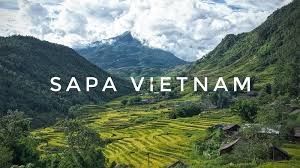
I woke up before my alarm because the cold had found its way under the blankets. In Sa Pa, mornings don’t announce themselves with sunlight so much as movement, clouds sliding past windows, distant footsteps on wet stone, the soft clink of metal as someone down the road opens their shop. When I pulled the curtain aside, the valley wasn’t really there yet. It hovered, half-visible, wrapped in mist that smelled faintly of wood smoke and damp earth.
This was my first real moment in Sa Pa, Vietnam, and it already felt slower, quieter, and somehow more inward-looking than the rest of the country I’d traveled through. No honking symphony like Hanoi. No motorbike chaos. Just layers of mountains dissolving into each other, as if the landscape hadn’t quite decided to be solid yet.
Down on the street, a woman in embroidered indigo walked past with a basket of greens balanced effortlessly on her back. Somewhere, a rooster was having a very optimistic morning. Sa Pa didn’t feel like a place you consume. It felt like a place that watches you arrive, waits to see how loudly you breathe, and then decides how much of itself to reveal.
That’s what this guide is about. Not just where to go or what to photograph, but why Sa Pa feels the way it does, and how to move through it with curiosity rather than urgency.
Where Sa Pa Is and Why It Exists Here?
Sa Pa sits in Lào Cai Province, tucked into Vietnam’s far northwest corner, not far from the Chinese border. On a map, it looks remote. On the ground, it feels even more so. The town itself rests at around 1,500 meters above sea level, high enough that the air is thinner, cooler, and often wet with cloud.
Altitude shapes everything here.
The weather shifts quickly - sun, fog, rain, sometimes all before lunch. Houses are built tight and practical, hugging slopes rather than standing proudly apart. Crops grow vertically instead of outward. Life follows the mountains’ logic, not the other way around.
Sa Pa is part of the Hoàng Liên Son mountain range, the rugged spine of northern Vietnam. These mountains are young and restless by geological standards, which explains the dramatic ridges and deep valleys that seem to drop away without warning. Water flows downhill relentlessly, feeding the Red River watershed, and over generations, local communities learned how to slow that water just enough to grow rice.
That’s how the famous terraces were born - not as scenery, but as survival.
When clouds roll through the valleys (and they often do), they don’t hover politely above the peaks. They move through villages, brush past doorways, and swallow footpaths. You can be standing in sunlight one moment and complete white silence the next. It makes you walk slower. It makes you listen.
I noticed quickly that people here have a different relationship with time. The mountains don’t rush, and neither do the people who’ve learned to live among them.
A Brief History of Sa Pa
Long before Sa Pa became a stop on backpacker itineraries or Instagram feeds, it was home to ethnic minority communities who had been farming these mountains for centuries. The Hmong, Dao, Tay, and Giay didn’t “settle” Sa Pa so much as grow into it, shaping the land carefully enough that it could keep feeding them.
Everything changed in the early 20th century, when the French colonial administration stumbled upon Sa Pa while mapping the region. They were looking for altitude and cool air, a place to escape the tropical heat of Hanoi - and Sa Pa, with its misty climate and alpine feel, fit perfectly.
The French built villas, a church, and infrastructure that still defines the town’s layout today. They envisioned Sa Pa as a hill station, a retreat. But history had other plans.
During decades of war, Sa Pa was heavily damaged and largely abandoned. Many colonial buildings were destroyed, and the region faded into isolation once again. For years, it was difficult for outsiders to reach at all.
It wasn’t until the 1990s, when Vietnam began opening up to international tourism, that Sa Pa re-emerged - this time as a trekking destination. Word spread about rice terraces, ethnic villages, and dramatic landscapes. Hotels appeared. Roads improved. And slowly, Sa Pa transformed.
Walking through town today, you can feel all these layers at once:
- Colonial bones beneath modern concrete
- Ancient village rhythms intersecting with tourism
- Opportunity and pressure sharing the same narrow roads
Sa Pa hasn’t finished becoming whatever it’s becoming. It’s still negotiating that identity, day by day.
The Ethnic Mosaic of Sa Pa
One of the first things visitors notice - sometimes uncomfortably - is how visibly different Sa Pa feels from lowland Vietnam. This isn’t just about scenery. It’s about people.
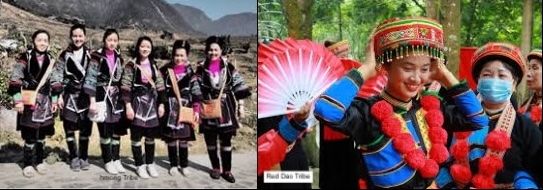
More than half of Sa Pa’s population belongs to ethnic minority groups, each with their own language, clothing, and traditions. The most prominent you’ll encounter are the Black Hmong and the Red Dao, though Tay and Giay communities are also part of the region’s fabric.
Hmong, Dao, Tay, and Giay Communities
The Black Hmong are perhaps the most recognizable, often dressed in deep indigo clothing dyed using traditional methods. The indigo isn’t just aesthetic - it’s practical, durable, and culturally symbolic. Over time, the dye stains the skin slightly, a mark of experience rather than something to scrub away.
The Red Dao are known for their elaborate red headscarves and intricate embroidery. Many Red Dao women are deeply knowledgeable about herbal medicine, and their traditional herbal baths have become well-known (and widely marketed) in Sa Pa.
The Tay and Giay communities often live in lower valleys, in stilt houses closer to water sources. Their clothing tends to be simpler, their villages quieter, but their agricultural knowledge is just as deep.
Each group speaks a different language. Vietnamese is often a second or third tongue.
Daily Life in the Villages
What stayed with me most wasn’t the clothing or crafts, but the ordinariness of daily life unfolding against such dramatic scenery.
Children walking to school along narrow ridges, laughing, completely unfazed by steep drops. Corn laid out to dry on wooden boards. Pigs wandering with a sense of entitlement. The sound of chopping wood echoing through fog.
Tourism has complicated things, of course. Some villagers sell handicrafts or guide treks. Others farm as they always have. The two worlds overlap constantly.
If there’s one thing I learned quickly, it’s that Sa Pa isn’t a museum. People here aren’t performing culture for visitors - they’re adapting it, negotiating it, sometimes protecting it, sometimes reshaping it to survive.
How you show up matters.
The Landscapes That Define Sa Pa
If Sa Pa were only a town, I don’t think people would travel this far for it. What pulls you north, up winding mountain roads and through sleepless nights on trains, is the land itself. Sa Pa’s landscapes don’t sit politely in the background. They demand attention, patience, and often a bit of effort from your legs.
This is a place shaped by hands as much as by weather. Every slope tells a story of adaptation.
Rice Terraces, Living Sculptures
The first time I saw Sa Pa’s rice terraces properly - not from a roadside viewpoint but from within them - I stopped walking without realizing it. The path narrowed, the ground softened underfoot, and suddenly the hills unfolded into layer after layer of green steps, curving with the land rather than fighting it.
These terraces weren’t built all at once. Families carved them over generations, cutting into mountainsides with simple tools, reinforcing walls with stone and packed earth, and learning exactly how water wanted to move. The result looks artistic, but it’s intensely practical.
Water flows from the highest terraces down through bamboo channels, feeding each level in turn. If one wall fails, everything below is affected. That interdependence mirrors village life itself.
The best areas to see Sa Pa’s rice terraces include:
- Muong Hoa Valley – the most expansive and dramatic
- Lao Chai – classic Black Hmong landscapes
- Ta Van – broader valleys, gentler slopes, fewer tour groups
The terraces change mood with the seasons:
- March–April (Water Season):
Fields reflect the sky like broken mirrors. Muddy, quiet, almost abstract. - May–August (Green Season):
Lush, vibrant, alive with insects and frogs. - September–October (Harvest):
Golden, heavy, and buzzing with activity.
There’s no “best” time - just different personalities of the same place.
Muong Hoa Valley, The Heartbeat of Sa Pa
If you only trek once in Sa Pa, make it through Muong Hoa Valley. This is where the region’s scale really reveals itself.
The valley stretches wide, framed by jagged ridges that fade into blue-grey silhouettes. Villages dot the slopes, smoke rising from kitchens in thin vertical lines when the air is still. Buffalo graze with the unbothered confidence of creatures who know they belong here.
As I walked, the sounds changed constantly:
- Soft squelch of boots in mud
- Water trickling through irrigation channels
- Occasional laughter drifting across fields
You don’t need a guide to appreciate Muong Hoa, but walking with someone who grew up here adds layers you’d otherwise miss - why one field floods differently, why another is planted later, which rocks mark old village boundaries.
The valley doesn’t show off. It just exists, generously.
Fansipan - The Roof of Indochina
At 3,143 meters, Mount Fansipan is the highest peak in Vietnam - and all of Indochina. For a long time, reaching the summit meant a multi-day trek through dense forest, steep climbs, and unpredictable weather. It was an achievement measured in sweat and sore muscles.
Today, there’s also a cable car.
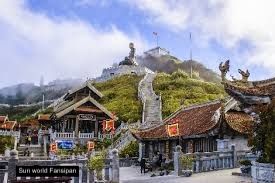
I’ll be honest: I struggled with how to feel about that. Part of me wanted Fansipan to remain difficult, reserved for those willing to earn it. But watching elderly Vietnamese visitors reach the summit, some visibly emotional, shifted my perspective.
The cable car doesn’t erase the mountain’s power. It just changes who gets to experience it.
At the top, the air is sharp and thin. Prayer flags snap in the wind. Temple bells ring softly, swallowed almost immediately by cloud. Some days, the view stretches endlessly. Other days, you stand inside whiteness, aware only of space and height.
Whether you trek or ride, Fansipan reminds you that Sa Pa isn’t just pastoral beauty—it’s raw altitude and weather and geology asserting itself.
What It’s Like to Trek in Sa Pa
Trekking in Sa Pa isn’t a neat, well-marked trail experience. It’s messy, muddy, intimate, and often humbling. You’ll walk on narrow earthen paths between terraces, cross streams on slippery stones, and sometimes share the trail with buffalo who have no intention of moving aside.
A typical trekking day feels less like a hike and more like moving through someone’s backyard.
You pass houses with doors open, pots simmering inside. Chickens scatter at your feet. Children shout greetings in English they’ve practiced carefully. The land isn’t curated for visitors—it’s lived in.
Guided vs. Independent Trekking
You can trek independently in Sa Pa, especially on well-known routes like Lao Chai to Ta Van. But there’s value in hiring a local guide, particularly from a village you’ll pass through.
A good guide offers:
- Context, not just directions
- Help navigating muddy or confusing paths
- Income that stays within the community
Many guides are women from Hmong or Dao villages, balancing farming, family, and tourism work. Walking with them often feels more like a conversation than a service.
What the Terrain Is Really Like
Let’s be clear: Sa Pa treks can be physically demanding.
- Trails can be steep and slick, especially after rain
- “Easy” routes still involve uneven ground
- Weather changes fast - sun to rain in minutes
What I learned the hard way:
- Good shoes matter more than fitness
- Trekking poles aren’t overkill
- Mud here has a personality and it’s clingy
But the effort sharpens your awareness. Every step requires attention, and that attention pulls you fully into the landscape.
Homestays - Sleeping Inside the Story
If trekking is how you understand Sa Pa physically, homestays are how you understand it emotionally.
A true village homestay isn’t a boutique experience. It’s sleeping on a thin mattress under a mosquito net, listening to dogs bark and roosters misjudge the time. It’s eating what the family eats, at the same table, with gestures filling in where language fails.
Most homestays include:
- Simple shared rooms
- Home-cooked dinner and breakfast
- A steady flow of rice wine if you’re not careful
In the evenings, conversation softens. Firelight flickers. Outside, the valley goes quiet except for insects and distant water. Without Wi-Fi or distractions, you notice small things—the way smoke curls, the rhythm of chopping vegetables, the mountain pressing close around the house.
You don’t leave with perfect understanding, but you leave changed.
Food in Sa Pa
Cold changes the way you eat. In Sa Pa, where evenings bite and mornings feel reluctant to warm up, food isn’t about lightness or speed. It’s about heat, smoke, and sharing.
I noticed quickly that meals here tend to gather people inward. Plastic stools pulled closer. Bowls held in both hands. Steam rising so thick it fogs glasses and windows alike.
Local Dishes Worth Seeking Out
Some foods in Sa Pa are proudly local. Others exist because cold-weather cravings demand them.
Thắng cố
This is the dish everyone talks about, often with raised eyebrows. Traditionally associated with Hmong communities, thắng cố is a communal stew cooked for festivals and gatherings. It’s strong, earthy, and not designed to impress tourists. I won’t pretend it’s an easy love, but tasting it with context, knowing it’s tied to community rather than novelty, made the experience feel respectful rather than performative.
Grilled Skewers at the Night Market
As evening falls, Sa Pa town fills with the smell of smoke and spice. Stalls line the streets selling:
- Marinated pork and chicken
- Mushrooms and tofu
- Corn and sweet potatoes
You point, they grill, you warm your hands over the coals while waiting.
Salmon and Sturgeon Hotpot
Yes, fish—raised locally in Sa Pa’s cold mountain waters. This hotpot is one of the region’s modern specialties. Thin slices of fish, fresh greens, and bubbling broth make it ideal for foggy nights when the town disappears outside restaurant windows.
Sticky Rice and Bamboo Rice
Often served at breakfast or as a side, these are simple but deeply satisfying. Sticky rice dyed with forest leaves carries subtle flavors and cultural meaning, especially during festivals.
What Eating in Sa Pa Feels Like
Eating here is rarely rushed. Even in restaurants, meals linger. In villages, dinners stretch as long as conversation does. Rice wine appears. Laughter grows louder. The cold recedes a little.
Food in Sa Pa isn’t about checking boxes. It’s about warming yourself from the inside out.
Sa Pa Town - Love It or Leave It?
Sa Pa town gets mixed reviews, and I understand why. It can feel crowded, commercial, and noisy compared to the valleys just beyond it. But it’s also where life intersects most visibly - tourists, locals, traders, kids, elders - all sharing the same narrow streets.
What the Town Does Well
- Early mornings: Before tour buses arrive, the town feels gentle and almost introspective.
- Cafés with views: There’s something comforting about sipping hot coffee while clouds drift past balconies.
- The central square and stone church: A colonial remnant that’s become a social anchor point.
At night, the town shifts again. Neon signs flicker. The night market hums. Music drifts from bars you don’t need to enter to feel their energy.
When Town Feels Overwhelming
Midday, especially on weekends, Sa Pa town can feel overfull. Souvenir shops blur together. Traffic snarls. That’s usually my cue to head out - to a café above town or straight back into the hills.
Sa Pa town works best as a base, not a destination.
Practical Logistics for Visiting Sa Pa
This is the part I always wish someone had explained calmly, without hype.
How to Get to Sa Pa
Sa Pa doesn’t have an airport. Everyone comes from Hanoi, roughly 320 km away.
Your main options:
- Overnight train (Hanoi → Lào Cai) + bus:
Slower but atmospheric. You sleep, wake up in the mountains. - Sleeper bus:
Direct and affordable, though comfort varies. - Private transfer:
Faster, more expensive, least adventurous.
Once in Lào Cai, it’s about an hour uphill to Sa Pa town.
Best Time to Visit Sa Pa
Sa Pa doesn’t have a single perfect season.
- March–May: Cool, green, occasional rain
- June–August: Lush but wet; trails get muddy
- September–October: Golden rice terraces, best visibility
- November–February: Cold, misty, sometimes icy
If terraces matter most, aim for September or October. If atmosphere matters more than views, winter has a quiet magic.
What to Pack
Sa Pa rewards preparation.
Bring:
- Layers (even in summer)
- Waterproof jacket
- Sturdy shoes with grip
Skip:
- Anything that can’t get dirty
- Overconfidence about the weather
Costs and Budget Expectations
Sa Pa can be budget-friendly or surprisingly expensive depending on choices.
- Homestays: Affordable and immersive
- Mid-range hotels: Widely available
- Guides: Reasonably priced and worth it
Spending a little more locally often makes a big difference in experience.
Responsible Travel in Sa Pa
Sa Pa feels fragile because, in many ways, it is.
Tourism brings income but also pressure - on land, culture, and daily life. Small choices matter:
- Hire local guides
- Ask before photographing people
- Stay in village-run homestays
- Buy crafts directly from makers
You’re a guest here, even if you stay longer than planned.
What Sa Pa Is (and Isn’t) For
Sa Pa is for:
- Travelers who like to walk slowly
- People curious about how landscapes shape lives
- Anyone willing to trade comfort for depth
It’s not for:
- Those short on time
- Travelers expecting polished luxury everywhere
- Anyone unwilling to get muddy
What Sa Pa Leaves You With
When I left Sa Pa, it wasn’t the views I replayed most - it was moments. Fog lifting just enough to reveal a single terrace. A shared meal where no one spoke the same language but everyone understood the rhythm.
Sa Pa doesn’t try to impress you. It lets you sit with it, quietly, until you notice what matters.