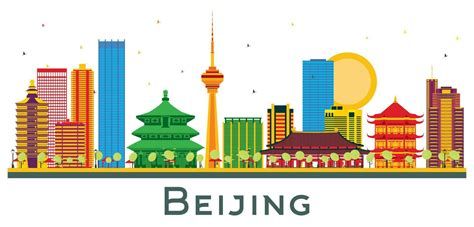
I still remember the moment Beijing first pressed itself into my senses - not gently, but all at once. The air felt heavier than I expected, carrying a mix of dust, distant smoke, and something oddly comforting, like roasted meat drifting from a street vendor. The city didn’t unfold slowly; it arrived in layers, wide roads packed with traffic, sudden glimpses of ancient rooftops, and people moving with quiet purpose.
Beijing isn’t the kind of place that tries to charm you immediately. It doesn’t smile for visitors. Instead, it waits. It watches. And then, somewhere between your first bowl of noodles and your third subway ride, it starts to reveal itself.
What struck me most was the scale. Everything feels deliberate and vast, as if built not just for people, but for history itself. You don’t just walk through Beijing, you walk through centuries of decisions, power, philosophy, and survival. And somehow, all of that still breathes in the present.
Understanding Beijing - A City Built on Power and Philosophy
A Brief History That Still Shapes the Streets
Beijing isn’t just old, it’s layered. And those layers don’t hide beneath the surface; they sit right in front of you.
The city became truly significant during the Yuan Dynasty, when Mongol ruler Kublai Khan made it his capital. That decision alone shifted Beijing from a regional city into the political heart of an empire. But it was the Ming Dynasty that gave Beijing its enduring identity.
During the Ming era, emperors reshaped the city with almost obsessive precision. They built the Forbidden City, a massive palace complex that wasn’t just a residence, but a statement of cosmic order. Everything in Beijing began to revolve around it, literally and symbolically.
Then came the Qing Dynasty, the last imperial rulers of China. Their fall in the early 20th century marked the end of thousands of years of imperial rule. But unlike many cities that shed their past to embrace modernity, Beijing held on.
You feel that persistence everywhere:
- In the straight, almost rigid layout of roads
- In the symmetry of buildings
- In the way old men still gather to play chess in quiet corners
History here isn’t preserved behind glass, it’s still in motion.
Philosophy in Everyday Life
Before coming to Beijing, I thought philosophy belonged in books or temples. But here, it’s embedded in the way the city breathes.
Three traditions quietly shape everything:
- Confucianism - order, hierarchy, respect
- Taoism - balance, flow, harmony with nature
- Buddhism - reflection, impermanence
You don’t need to study them to notice their influence. You see it in the city’s structure, wide avenues aligned with almost mathematical precision, buildings arranged symmetrically as if the universe itself demanded balance.
But more interestingly, you feel it in people.
There’s a certain rhythm to how locals move:
- People queue without chaos
- Conversations are often calm, even in busy places
- Public spaces feel shared rather than claimed
One morning, I sat in a park watching a group of elderly residents moving slowly through tai chi. No rush, no performance, just quiet repetition. Around them, others sang, played instruments, or walked backwards (a surprisingly common sight). It felt less like exercise and more like a daily ritual of alignment, with the body, with time, with the city itself.
The Icons of Beijing - Walking Through the City’s Soul
The Forbidden City - Power Frozen in Time
The first time I stepped into the Forbidden City, I underestimated it.
From the outside, it looks impressive but contained. Inside, it unfolds endlessly-courtyard after courtyard, gate after gate, each one echoing the last yet slightly different. It’s easy to lose your sense of direction, but that’s part of the design. This wasn’t meant to be navigated casually; it was meant to overwhelm.
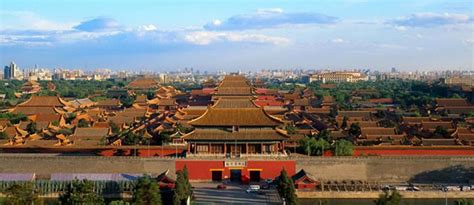
The colors hit me first:
- Deep imperial red walls
- Golden roofs glowing under sunlight
- Stone courtyards stretching into silence
Everything here had meaning. Even the number of steps, the placement of statues, the height of doorways, they all reinforced hierarchy. The emperor wasn’t just a ruler; he was positioned as the center of the universe.
And yet, what stayed with me wasn’t the grandeur, it was the emptiness.
Despite the crowds, there are moments when you find yourself standing in a quiet corner, looking at a palace that once held unimaginable power. No voices, no movement, just space. It makes you realize how temporary even the most absolute authority can be.
What most people miss:
- The side halls, often quieter and more intimate
- The subtle carvings on doorways and beams
- The feeling of repetition, which slowly becomes meditative
Tiananmen Square - Space, Silence, and History
Just outside the Forbidden City lies Tiananmen Square, and the transition between the two is striking.
If the Forbidden City feels enclosed and controlled, Tiananmen Square feels open—almost overwhelmingly so. It’s one of the largest public squares in the world, and standing there, I felt oddly small.
There’s a certain quietness to the space, even when it’s crowded. People move steadily, security is visible but not intrusive, and everything feels…observed.
This square has witnessed some of the most significant moments in modern Chinese history. But what you feel there isn’t loud or dramatic, it’s restrained. The weight of history exists, but it doesn’t announce itself.
I found myself slowing down, speaking less, just watching.
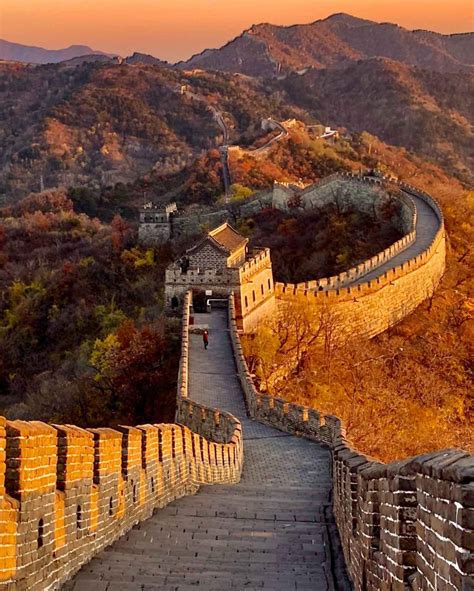
The Great Wall - Where the Earth Rises to Meet the Sky
You can’t come to Beijing and ignore the Great Wall of China. But the experience depends entirely on where you go.
Some sections feel like a theme park. Others feel like the edge of the world.
I chose Mutianyu, and what I remember most is the wind.
Up there, the air changes. It’s sharper, cleaner. The wall stretches over mountains like a spine, rising and falling in a rhythm that feels almost natural, as if the earth itself decided to build it.
Walking on it isn’t easy:
- Uneven steps
- Steep climbs
- Long stretches without shade
But every time I turned around, the view pulled me forward again.
What surprised me most was the silence. Not complete silence, but a softened version of the world below. Conversations fade, footsteps echo differently, and for a moment, it feels like time has loosened its grip.
Temple of Heaven - Where Emperors Spoke to the Sky
The Temple of Heaven feels different from everything else in Beijing.
It isn’t about power, it’s about connection.
This is where emperors once prayed for good harvests, believing they were intermediaries between heaven and earth. The architecture reflects that belief:
- Circular buildings (symbolizing heaven)
- Square layouts (representing earth)
But what stayed with me wasn’t the history, it was the present.
I arrived early in the morning, and the park surrounding the temple was alive:
- People dancing in groups
- Musicians playing traditional instruments
- Elderly couples walking hand in hand
It didn’t feel like a tourist site. It felt like a living space.
And somehow, that made the temple itself more meaningful, not as a relic, but as something still connected to everyday life.
The Hutongs, The Soul Between the Monuments
If Beijing’s landmarks show you its history, the hutongs show you its heart.
These narrow alleyways weave through the city like hidden veins, lined with traditional courtyard homes. Walking through them feels like stepping into a different rhythm, slower, quieter, more personal.
I remember getting lost in one, completely by accident. There were no grand sights, no famous landmarks, just:
- Laundry hanging between buildings
- A man repairing a bicycle
- The smell of food drifting from a small kitchen
At one point, an elderly woman nodded at me as I passed. No words, just acknowledgment. It felt strangely grounding.
The hutongs aren’t polished. Some are crumbling, others are being restored. But they hold something the rest of Beijing sometimes hides intimacy.
And if you spend enough time in them, you start to understand the city not as a capital, but as a collection of lives.
Food in Beijing = Where Every Bite Tells a Story
If there’s one thing that quietly reshaped my understanding of Beijing, it wasn’t a monument, it was a meal.
Food here isn’t just about taste. It’s about ritual, rhythm, and memory. You don’t just eat in Beijing, you participate in something that’s been refined over generations.
The Ritual of Peking Duck
You can’t talk about Beijing without talking about Peking Duck. And yes, it’s famous, but what surprised me is how ceremonial it feels.
The first time I ordered it, I expected just a plate of roasted meat. Instead, a chef appeared at the table and began slicing the duck with almost surgical precision.
Here’s how it unfolds:
- The skin is carved first thin, crisp, almost glass-like
- Then the meat, tender and slightly sweet
- Served with pancakes, scallions, cucumber, and hoisin sauce
You assemble it yourself. And that’s part of the experience.
I remember the first bite warm pancake, crunch of skin, softness of meat, sharpness of scallions. It wasn’t overwhelming. It was balanced.
Where to try it (if you want the full experience):
- Traditional, historic restaurants for authenticity
- Smaller local spots for a more casual, less performative meal
What I learned quickly: don’t rush it. This is not fast food, it’s a conversation you have with your plate.
Street Food That Feels Like Discovery
Some of my favourite meals in Beijing didn’t involve menus at all.
You’ll find street vendors tucked into corners, near subway exits, or along busy night streets. There’s no big sign, no polished branding, just the smell that pulls you in.
Things I kept going back to:
- Jianbing (savory breakfast crepe)
- Made fresh on a hot griddle
- Egg cracked onto the surface, then herbs, sauce, and crispy crackers
- Folded and handed to you in seconds
- Best eaten standing, slightly burned fingers included
- Baozi (steamed buns)
- Soft, pillowy, filled with pork, vegetables, or sweet paste
- Cheap, filling, and everywhere
- Chuan’r (skewers)
- Grilled over open flames
- Seasoned with cumin and chili
- The smell alone can stop you mid-walk
At night, some areas transform into informal food streets. The air thickens with smoke, laughter, and overlapping aromas sweet, spicy, savory, unfamiliar.
I remember hesitating before trying something I couldn’t identify. The vendor smiled, gestured reassuringly, and I gave in. It turned out to be one of the best things I ate.
That’s Beijing street food it rewards curiosity.
Dining Culture - Loud, Shared, Alive
Restaurants in Beijing feel different from what many travelers expect.
Meals aren’t individual, they’re communal.
You’ll often see:
- Large round tables with a rotating center (lazy Susan)
- Multiple dishes shared among everyone
- Conversations overlapping, rising and falling in waves
At first, it felt chaotic. Then it started to feel…warm.
There’s an unspoken rhythm:
- Someone orders for the group
- Dishes arrive gradually
- Everyone takes a little of everything
Tea flows constantly. Plates never stay full for long.
I once sat in a small, crowded restaurant where no one spoke English. I pointed at dishes on another table, hoping for the best. The people next to me noticed, laughed softly, and helped me order.
We never had a full conversation, but we shared a meal. And somehow, that was enough.
The Sounds, Smells, and Pace of Beijing
Beijing isn’t just something you see, it’s something you absorb.
What You Hear
At first, the city sounds like noise. But if you listen longer, patterns emerge.
- The soft ring of bicycle bells weaving through traffic
- The low hum of conversations in parks
- Distant announcements in subway stations
- Music - sometimes traditional, sometimes unexpectedly modern
One morning, I woke up to singing. Not from a speaker, but from a group of people gathered outside, practicing together. It wasn’t perfect, but it was sincere.
And that’s what stayed with me, Beijing doesn’t try to sound polished. It sounds real.
What You Smell
Smell is one of the most immediate ways Beijing introduces itself.
It changes depending on where you are:
- Street corners: grilled meat, oil, spices
- Temples: incense, faint and steady
- Older neighborhoods: a mix of cooking, dust, and time
In winter, there’s a sharper edge to the air colder, cleaner in some ways. In summer, everything feels heavier, more concentrated.
Sometimes the smells clash. Sometimes they surprise you. But they’re always present, always part of the experience.
What You Feel
This is harder to explain, but it’s what defines Beijing for me.
The city holds contradictions:
- It’s immense, yet deeply personal in its corners
- It’s structured, yet full of unexpected moments
- It feels ancient, but never frozen
There were moments I felt overwhelmed, lost in crowds, unsure of direction. And then suddenly, I’d turn into a quiet alley or sit in a park and feel completely at ease.
Beijing doesn’t smooth itself out for you. You have to meet it halfway.
Practical Guide - Navigating Beijing Without Feeling Lost
For all its history and complexity, Beijing is surprisingly manageable once you understand a few basics.
Getting There
Most international travelers arrive through Beijing Capital International Airport.
It’s large, efficient, and well-connected to the city.
What to expect:
- Clear signage (often in English as well)
- Airport express train into the city
- Taxis readily available (though language can be a barrier)
Entry basics:
- Visa requirements depend on your nationality
- Short visa-free transit options exist for some travelers
Getting Around the City
Beijing’s size can feel intimidating, but its transport system is one of its strengths.
Subway (my go-to):
- Clean, fast, and affordable
- Signs and announcements in English
- Covers most major attractions
Taxis & Ride Apps:
- Relatively inexpensive
- Language barrier can be tricky, having your destination written in Chinese helps
Walking:
- Best in hutongs and smaller neighborhoods
- Sidewalks are wide, but distances can be longer than they seem
One thing I learned quickly: distances in Beijing are deceptive. What looks “close” on a map can take much longer to walk than expected.
Where to Stay
Where you stay shapes your experience more than you might think.
Dongcheng District (my favorite):
- Close to major landmarks
- Rich in history
- Easy access to hutongs
Chaoyang District:
- More modern
- International vibe
- Plenty of restaurants and nightlife
Types of stays:
- Budget hostels (clean, social)
- Boutique hotels in renovated courtyard houses
- Luxury hotels with full amenities
If I had to choose again, I’d stay in a hutong-style accommodation. It’s quieter, more atmospheric, and feels closer to the city’s roots.
Best Time to Visit Beijing (And When to Avoid It)
Timing your visit to Beijing isn’t just about weather, it’s about how the city feels. The same street can feel poetic in October and overwhelming in July.
Seasons Breakdown
🌸 Spring (March–May)
Spring in Beijing feels like the city stretching after a long sleep.
- Temperatures are mild and comfortable
- Parks begin to bloom, especially with cherry blossoms
- Occasional dust storms roll in from the north
I remember walking through a park one afternoon, petals drifting through the air, only to feel a sudden gust of dry wind an hour later. Spring is beautiful, but slightly unpredictable.
☀️ Summer (June–August)
Summer is intense. There’s no soft way to put it.
- Hot and humid, often above 30°C
- Crowds peak, especially at major attractions
- Sudden rainstorms offer brief relief
The city feels louder in summer, more movement, more noise, more energy. But it can also feel exhausting. I found myself planning days around air-conditioned breaks and early mornings.
🍂 Autumn (September–November) (My personal favorite)
If Beijing has a “perfect” season, this is it.
- Crisp air, clear skies
- Comfortable temperatures
- Fewer crowds than summer
There’s a clarity to everything, the light, the الهواء, even your thoughts. Walking along the Great Wall of China during autumn felt almost surreal, with golden leaves framing the mountains.
❄️ Winter (December–February)
Winter strips Beijing down to its bones.
- Cold, often below freezing
- Fewer tourists
- Occasional snow adds a quiet beauty
It’s not the easiest time to visit, but it might be the most honest. The city feels slower, more introspective. I remember standing in a nearly empty courtyard, breath visible in the air, feeling like I had stepped into another era.
Festivals & Crowds
Major periods to be aware of:
- Chinese New Year
- The biggest holiday in China
- Many locals leave the city
- Some businesses close, others become extremely busy
- Golden Week (early October)
- Massive domestic travel surge
- Attractions become extremely crowded
If you prefer space and calm, I’d avoid these periods. If you want to see Beijing at its most energetic, they can be fascinating—but intense.
Costs and Budgeting - What to Expect
Beijing can be surprisingly flexible when it comes to budget. You can experience the city richly without spending excessively—or go all out if you want comfort and luxury.
Daily Budget Ranges
💰 Budget Traveler
- Hostel or budget hotel
- Street food and casual meals
- Public transport only
👉 Approx: $30–50 per day
💳 Mid-Range Traveler
- Boutique hotel or comfortable stay
- Mix of restaurants and street food
- Occasional taxis
👉 Approx: $70–120 per day
💎 Luxury Traveler
- High-end hotels
- Fine dining experiences
- Private tours or drivers
👉 $200+ per day
Typical Costs
- Entry to major attractions:
- Forbidden City: modest fee
- Temple of Heaven: affordable
- Subway rides: very cheap (often under $1)
- Street food: incredibly affordable and filling
What stood out to me was how accessible everyday experiences are. Some of my best moments, wandering hutongs, eating street food, cost almost nothing.
Cultural Etiquette - Blending In, Not Standing Out
Beijing isn’t overly strict with tourists, but small efforts go a long way.
Basic Do’s and Don’ts
Do:
- Respect queues and public order
- Speak softly in quieter spaces
- Observe before acting (especially in temples or parks)
Don’t:
- Assume everyone speaks English
- Be overly loud in calm environments
- Treat historical sites casually
Language Tips
Mandarin dominates, and English isn’t always widely spoken outside tourist areas.
Helpful strategies:
- Keep your hotel address written in Chinese
- Use translation apps
- Learn a few simple phrases (even basic ones are appreciated)
I found that even a small attempt, like saying “thank you” in Mandarin, often changed the interaction completely. People became warmer, more open.
Observations on Hospitality
Beijing’s hospitality isn’t always expressive, but it’s genuine.
People may not smile constantly or engage in small talk, but:
- They will help if you’re lost
- They will guide you if you ask
- They often go out of their way quietly, without making a show of it
It’s a different kind of warmth, less visible, but deeply present.
Hidden Corners Most Travelers Miss
Some of my most memorable experiences in Beijing happened when I stopped chasing landmarks.
Places That Stay With You
- Local parks at sunrise
Watching daily life unfold, tai chi, music, quiet conversations - Lesser-known temples
Smaller, quieter, often more atmospheric than major sites - 798 Art District
A contrast to imperial Beijing, modern, creative, slightly rebellious - Unmarked alleyways in hutongs
Where life happens without performance
Unexpected Moments
I once followed the sound of music into a park and found a group of strangers dancing together, no stage, no audience, just shared joy.
Another time, I sat on a low stool outside a tiny food stall, eating something I couldn’t name, while the owner watched me with quiet amusement.
These weren’t “must-see” experiences. But they’re the ones I remember most.
Final Reflections - Why Beijing Isn’t Easy, But It’s Worth It
Beijing doesn’t try to be easy.
It’s not immediately charming like some cities. It doesn’t wrap itself around you and make you feel comfortable from the start. There were moments I felt lost, overwhelmed, even slightly out of place.
But that’s exactly why it stays with you.
Because when Beijing opens up, it does so honestly.
It shows you:
- Power and impermanence
- Structure and spontaneity
- Distance and intimacy
And somewhere along the way, you stop trying to “figure it out” and just start experiencing it.
I left Beijing with more questions than answers. But also with a quiet appreciation, for a city that doesn’t simplify itself for anyone.