First Impressions: A City Standing on Its Toes
I will tell you the truth about the first hour I spent in Chongqing: I got lost trying to find the ground floor. Not metaphorically. I walked out of a building on what I thought was street level, and I was, in fact, on the twenty-second floor of a hillside, looking down at a river of headlights I hadn't known was there. Chongqing does this to people. It is a city built less on land than on top of itself, stacked in switchbacks and stilts and skywalks, so that "up" and "down" stop being useful directions and you start navigating by landmark instead, the way sailors used to navigate by stars.
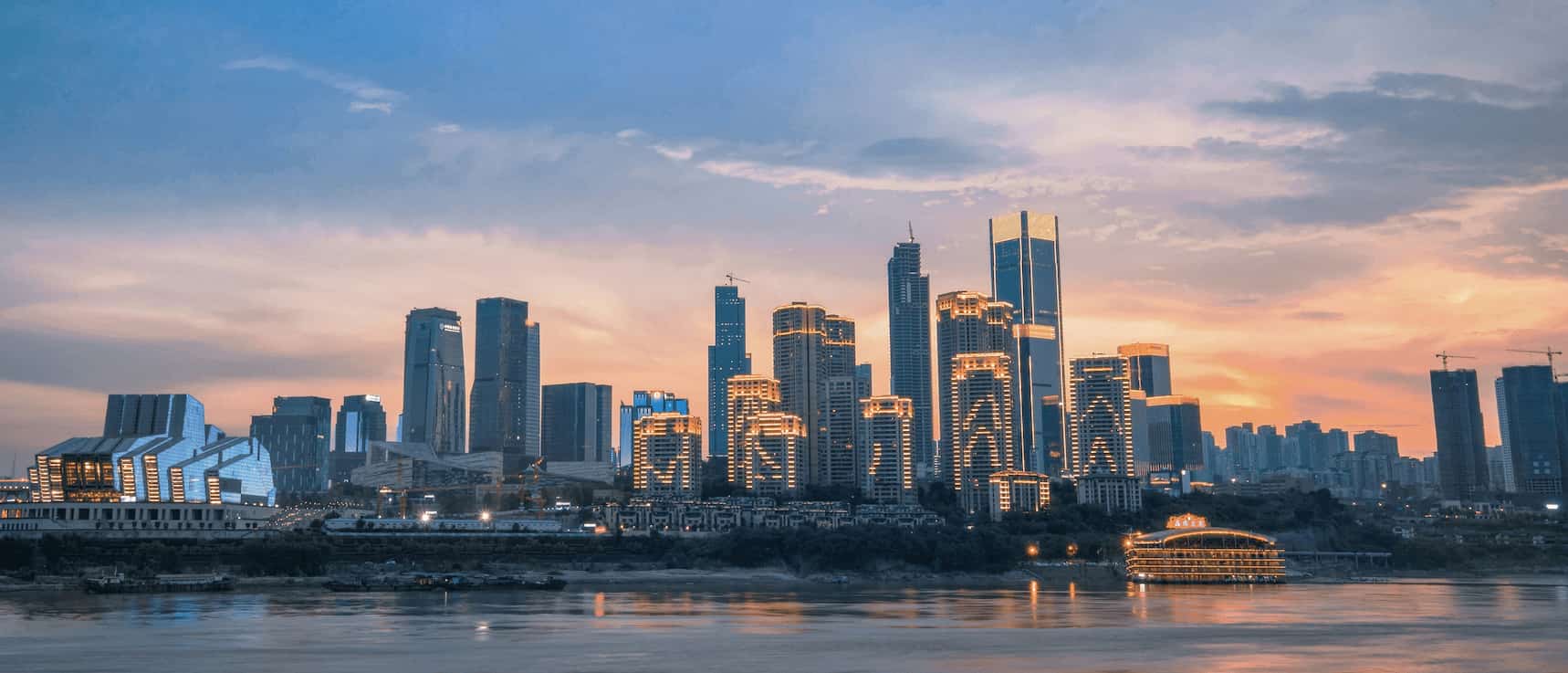
This is a city of roughly 32 million people spread across a sprawling municipality, though the urban core you'll actually experience feels more intimate and more chaotic than that number suggests. It sits at the confluence of the Yangtze and Jialing rivers, wrapped in hills so steep that entire neighborhoods have outdoor escalators instead of streets. Locals call it 山城, the Mountain City, and 雾都, the Fog City, and both names are earned. There is a heaviness to the air here, a humidity that clings to your shirt by nine in the morning, and a haze that softens the skyline into something that looks, on the right evening, like a watercolor someone left out in the rain.
What I want to tell you, more than anything, is that Chongqing rewards a traveller who is willing to get a little lost. It is not a city of single monuments you tick off a list. It's a city of textures, the hiss of chili oil hitting a hot pot, the clang of the old cableway, the smell of river water and cigarette smoke and fermented broad bean paste all arriving at once on a warm gust of wind. This guide is my attempt to hand you both halves of that experience: the feeling of the place, and the practical scaffolding you'll need to go find it yourself.
A Little History, and Why the City Is the Way It Is
Chongqing's personality wasn't designed. It was carved out by geography and then hardened by history, and understanding both makes the place click into focus.
Built by rivers, before it was built by people
The city sits on a narrow peninsula where the Yangtze and Jialing rivers meet, and for most of its history that confluence was its entire reason for existing. Merchants, salt traders, and boatmen used it as a waypoint for over three thousand years, the area was already a settlement during the Ba Kingdom era, well before it carried the name Chongqing, which was given during the Song Dynasty and translates roughly to "double celebration," commemorating an emperor's ascension to two thrones in the same year.
But it was the terrain, not the trade, that gave the city its architecture of stairs. Flat land was scarce, so builders went vertical centuries before anyone had a word for "skyline." Old Chongqing was a city of stilt houses (吊脚楼) clinging to cliffsides above the river, a style you can still see recreated, beautifully, at Hongya Cave.
The wartime capital
The single most important chapter in Chongqing's modern identity is its role during the Second Sino-Japanese War. When Nanjing fell in 1937, the Nationalist government relocated the capital of China here, largely because the mountains and near-permanent fog made it difficult for Japanese bombers to target effectively. For roughly eight years, Chongqing was the wartime capital of the country, absorbing sustained bombing raids while also becoming a hub for Allied cooperation, this is where you'll find sites connected to General Joseph Stilwell and the broader Flying Tigers story. That period still shapes how the city thinks of itself: gritty, resilient, a little defiant, proud of having endured something and kept going.
A city of chili and salt roads
Long before hotpot became the city's calling card, Chongqing sat on the trade routes that carried salt from wells further inland out toward the rest of the country, and it was those same routes, plus the damp climate that made fresh food spoil quickly, that pushed local cooking toward heavy use of chili and preserved, fermented flavors in the first place. Food here has always been practical before it was indulgent, a way of making cheap, plentiful ingredients (offal, river fish, whatever vegetables were in season) taste like something worth sitting down for. That thread runs directly from those old trade roads to the hotpot pot in front of you tonight.
From industrial base to mega-city
After the war, Chongqing's mountainous, hard-to-bomb geography made it attractive again, this time for heavy industry, as part of China's "Third Front" strategy to move manufacturing inland, away from vulnerable coastal areas. Factories and military plants were built into the hillsides and, in some cases, literally inside caves. That industrial DNA lingers today in surprising ways: old factory complexes have been repurposed into art districts, and there's a texture of rust and steel underneath the neon that you don't find in more polished eastern cities.
In 1997, Chongqing was separated from Sichuan province and elevated to a direct-controlled municipality, on the same administrative tier as Beijing and Shanghai. This triggered a construction boom that, frankly, hasn't stopped. What you see today — the tangle of elevated highways, the bridges (Chongqing has more river bridges than almost any city on earth), the monorail punching through apartment buildings is largely the product of the last three decades, layered on top of a much older river town. That layering, old stilt houses beside glass towers beside Mao-era factories, is what gives the city its slightly hallucinatory visual rhythm.
The Physical Highlights
Chongqing isn't a city of one or two must-see monuments. It's a city you experience through a handful of set-piece neighborhoods and viewpoints, each with a very different mood.
Hongya Cave (洪崖洞)
This is the postcard shot, and it earns the hype more than most postcard shots do. Hongya Cave is an eleven-story complex of stilted wooden buildings built directly into the cliff face above the Jialing River, styled after the old riverside dwellings I mentioned earlier. By day, it's pleasant but unremarkable, a market of souvenir shops and snack stalls stacked up the hillside. At night, when every level lights up gold and the reflection smears across the dark water below, it turns into something closer to a film set. Go around dusk, find the viewing platform across the river (near Qiansimen Bridge) for the classic wide shot, then cross over and get lost in the stalls themselves.
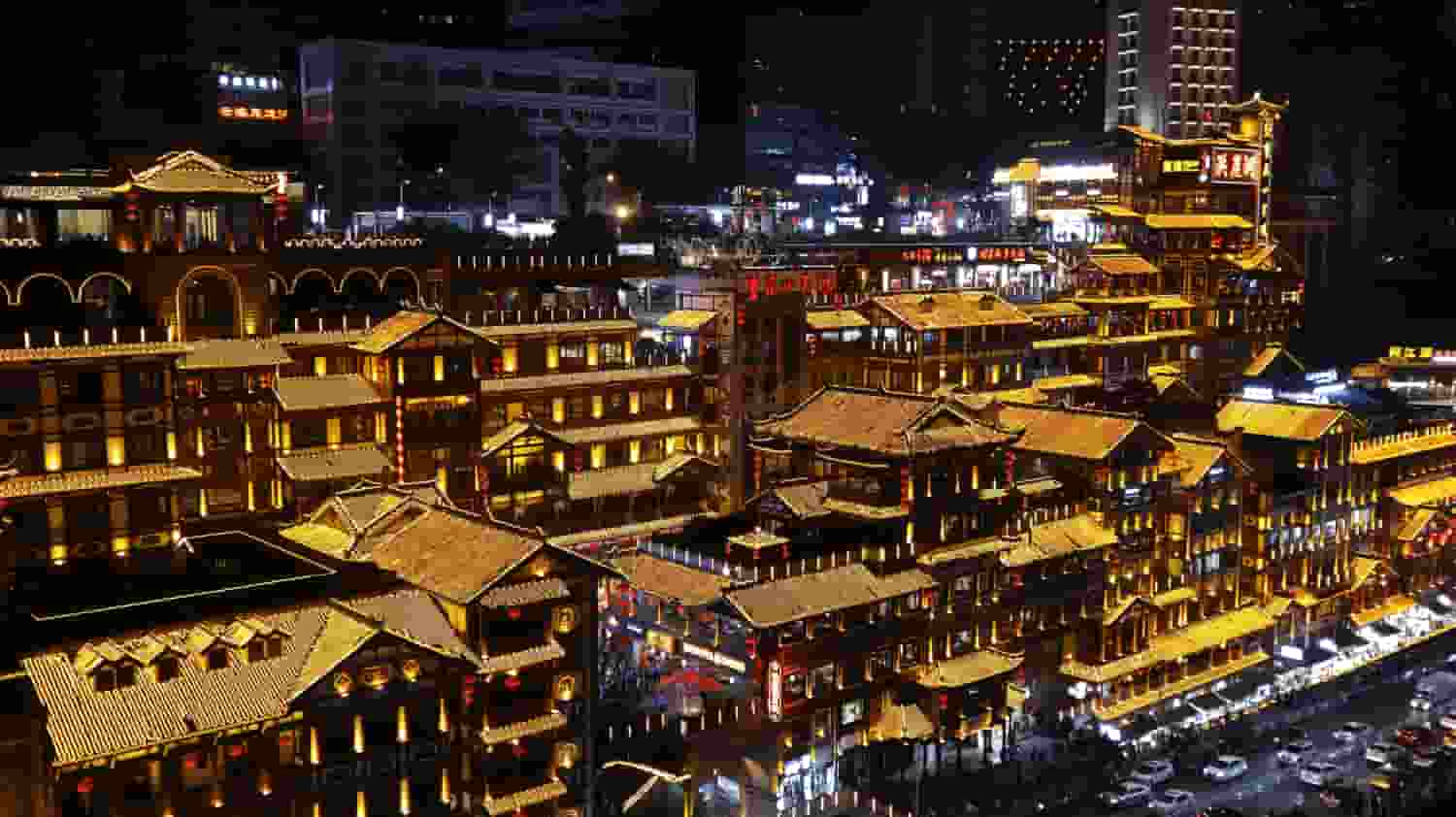
- Best time: just after sunset, when the lights are on but the sky still has some color in it
- Expect crowds - this is the most photographed spot in the city, especially on weekends
- It's free to walk through; you only pay for what you eat or buy
The Yangtze River Cableway (长江索道)
Built in the 1980s as actual public transport across the river, before enough bridges existed, this cable car has since become a tourist ride in its own right and I mean that as a compliment. The cabins are small, a little rattly, and give you a genuinely vertiginous view over the container ships and bridge traffic below. It's short, maybe four minutes each way, but it's one of the few spots where you get an unobstructed, elevated view of just how much the city stacks on top of itself.
- Buy tickets on-site; lines can be long on weekends and holidays
- Ride it both directions if you can, the return trip has a different light angle
Liziba Monorail Station (李子坝轻轨站)
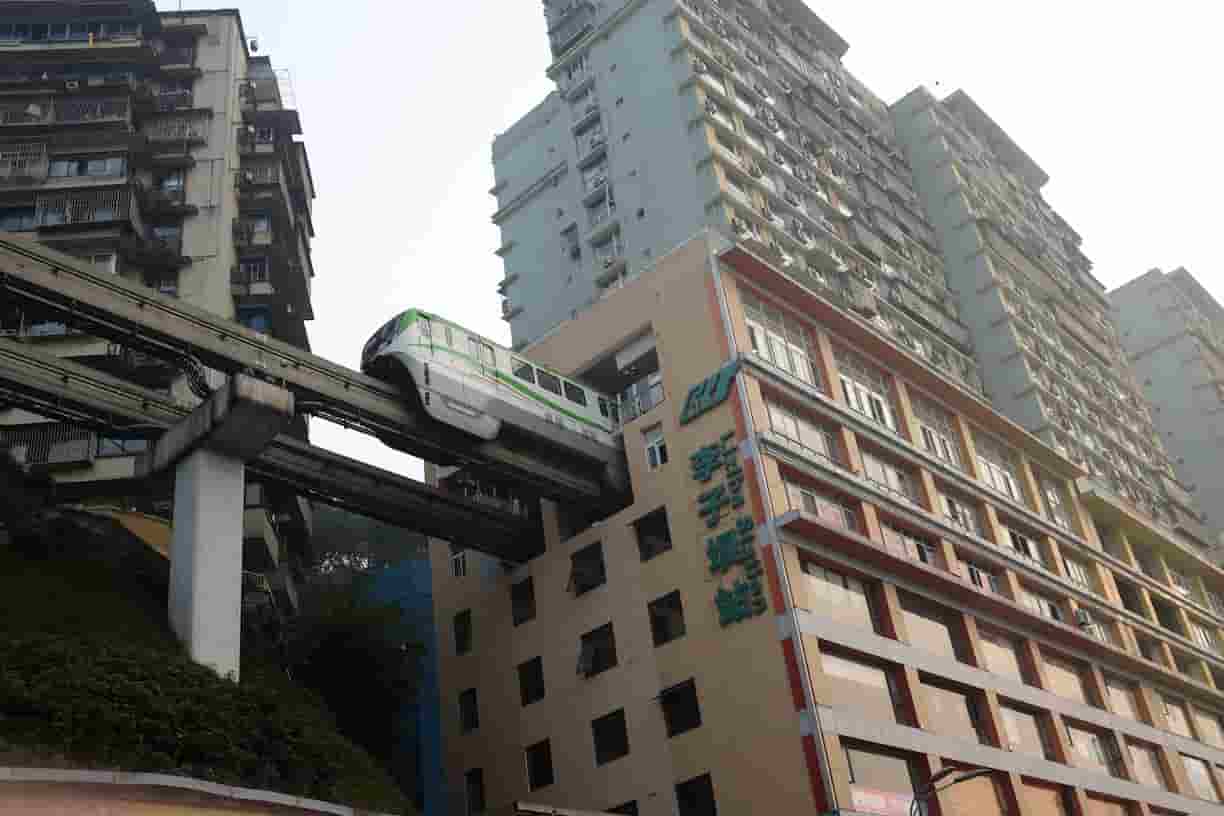
This is the moment every Chongqing highlight reel includes: Line 2 of the light rail passing directly through the sixth to eighth floors of a residential apartment building. It sounds like a gimmick until you're standing at the designated viewing platform and a train actually emerges from a hole in the middle of someone's home building. There's a small viewing deck built specifically for photographers, and yes, you will be one of many people trying to get the shot.
Ciqikou Ancient Town (磁器口)
A partially restored Ming and Qing dynasty riverside town, now dense with narrow stone lanes, tea houses, and vendors selling everything from spicy strips of dougan (pressed tofu) to hand-pulled sugar candy. It's touristy, no question, but it's touristy in the way that still smells like a real place, woodsmoke, frying oil, the particular sweetness of roasted chestnuts. Push past the main strip into the side alleys for quieter lanes, a working Buddhist temple (Baolun Temple), and river views without the crowds.
Eling Park and the viewpoints of Yuzhong
For a break from crowds, Eling Park sits on one of the highest points of the Yuzhong peninsula and gives you a genuinely commanding view over both rivers at once. It's where locals go to escape the summer heat under old cypress trees, and it's a good spot to just sit for twenty minutes and let the scale of the city sink in.
Three Gorges - the river journey
If you have more than a couple of days, Chongqing is the classic departure point for cruises down the Yangtze through the Three Gorges toward Yichang or Wuhan. These range from short two-night sailings to longer, more comfortable four-night trips. It's not an inexpensive add-on, and the gorges themselves have been partly reshaped by the Three Gorges Dam, but the scale of the limestone cliffs and the sheer traffic of river life, barges, fishing boats, small riverside towns, is still worth the time if your schedule allows it.
Stilwell Museum and wartime sites
For the history-minded, the former residence of General Joseph Stilwell, now a small museum, offers a quieter, more contemplative counterpoint to the neon of Hongya Cave. It documents the US-China wartime alliance and Chongqing's role as a bombed but unbroken capital. Nearby, other preserved wartime residences and bomb shelters (some of which are now, appropriately, hotpot restaurants) round out the picture of a city that has always built its future directly on top of its past.
Wulong Karst and the Grand Canyon of Wulong
A few hours outside the city proper, Wulong's karst landscape, sinkholes, natural stone bridges, and the dramatic Furong Cave, is worth a full day trip if you're not rushed. It's a genuinely different register of scenery from the urban vertigo of downtown, all green and vertical and quiet.
Huangjueping and the Tank Loft Art District
Less photographed but worth the detour, this is a former munitions and machinery factory complex that's been slowly colonized by artists, small galleries, and independent studios. It has none of the polish of Beijing's 798, and that's exactly its appeal rusted equipment sits next to fresh graffiti murals, and you can wander for an hour without seeing another tourist. Combine it with nearby Sichuan Fine Arts Institute, whose surrounding streets are covered in some of the most vivid street art in the country.
Jiefangbei and Chaotianmen
Jiefangbei, the old "Liberation Monument" district, is the closest thing Chongqing has to a conventional downtown core, dense with shopping malls, neon, and pedestrian streets that get almost uncomfortably crowded on weekend evenings. Walk downhill from there and you reach Chaotianmen, the historic point at the very tip of the peninsula where the two rivers actually meet. It's a strange, slightly melancholic spot: a modern plaza and shopping complex built directly over what used to be the city's original gate and dock, with the muddy Yangtze on one side and the clearer green Jialing on the other, visibly refusing to blend for a surprising distance downstream.
Human Elements: How the City Sounds, Smells, and Tastes
If Beijing feels imperial and Shanghai feels ambitious, Chongqing feels physical. It's a city you feel in your legs (from the stairs), in your sinuses (from the chili), and in your ears (from the traffic echoing off canyon-like streets). It is loud in a way that never quite tips into unpleasant mahjong tiles clacking through open apartment windows, scooters weaving through pedestrian alleys, someone's grandmother arguing cheerfully with a fishmonger over the price of river carp.
Hotpot: the city's actual religion
You cannot understand Chongqing without understanding its hotpot, which is spicier, oilier, and more aggressively numbing than the versions you may have had elsewhere. The defining sensation is málà (麻辣) - "numbing-spicy" - from Sichuan peppercorns combined with dried chilies, and it produces a genuinely strange tingling sensation on your lips and tongue that first-timers often mistake for the broth being too hot temperature-wise. It isn't. It's the peppercorns doing their work.
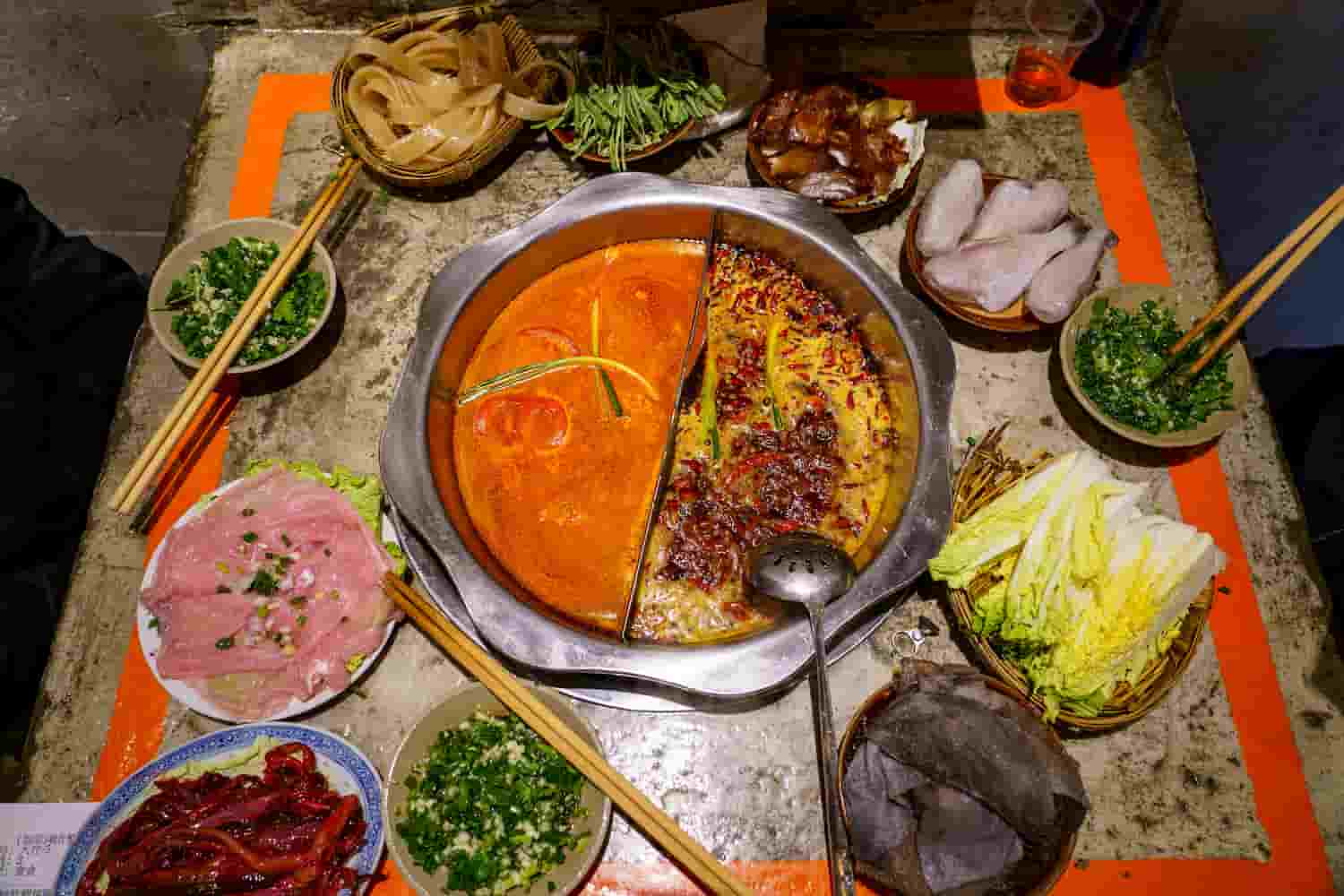
- The classic pot is 九宫格 (jiǔgōnggé), a nine-grid divided pot so different ingredients cook at different intensities
- Order a yuanyang (鸳鸯) pot, half spicy, half mild, if you want to ease in rather than commit fully
- The dipping sauce is usually sesame oil with garlic, which cools the mouth between bites, don't skip it
- Good, unpretentious spots tend to be plastic-stool, fluorescent-light places with a line outside, not the polished ones with English menus
I remember sitting at a hotpot table near the river on my first night, sweating through my shirt, eyes watering, absolutely unable to feel the tip of my tongue, and thinking: this is either the worst decision I've made all trip or the best one. It was the best one. By the third bite your mouth adjusts, and something almost meditative kicks in, the ritual of cooking each ingredient exactly long enough, fishing it out, dunking it in sesame oil, repeating.
Beyond hotpot: the other essential bites
- Xiaomian (小面) - Chongqing's famous "little noodles," a breakfast and anytime staple in a spicy, savory broth with peanuts and pickled vegetables. Cheap, fast, and arguably the most honest food in the city.
- Spicy rabbit head (兔头) - exactly what it sounds like, sold from street carts, and a genuine local delicacy if you're adventurous
- Jiangtuan fish hotpot - a river-fish variation for those who want the hotpot experience with a slightly gentler protein
- Suan La Fen - hot and sour glass noodle soup, good for a lighter meal between bigger ones
- Liangfen - cold jelly noodles tossed in chili oil, sold as a street snack, genuinely refreshing in the summer heat despite the spice
Tea houses, breakfast stalls, and the slower hours
Not everything about Chongqing is intense. Early mornings belong to a gentler rhythm, old men playing cards or Chinese chess in small parks, tea houses along the river filling with regulars nursing a single cup of jasmine tea for hours, breakfast carts selling steamed baozi and douhua (soft, barely-set tofu pudding, sweet or savory depending on the stall). If you only experience the city after dark, in hotpot steam and neon, you'll miss this quieter half of it, which is arguably just as honest a picture of daily life here.
The sound and smell of the city
Early mornings by the river carry the smell of damp stone and diesel from the barges; by mid-morning that gives way to frying oil and the sweetness of steamed buns from breakfast stalls. Evenings smell like chili, charcoal, and cigarette smoke drifting out of hotpot restaurants with their doors thrown open. Sonically, the city has a constant low hum of construction and traffic, punctuated by the specific clatter of mahjong tiles that seems to follow you down almost every residential street after dark, it's one of the most distinctive, oddly comforting sounds in the country.
Practical Logistics
Getting there
- By air: Chongqing Jiangbei International Airport (CKG) is well connected to major Chinese cities and a growing number of international routes. It's roughly 40–60 minutes from the city center by metro or taxi.
- By high-speed rail: Chongqing is tightly linked into China's HSR network. Chengdu is about 1.5–2 hours away, making a Chengdu–Chongqing combo trip very easy; Xi'an, Guiyang, and Wuhan are also reachable in a few hours.
- By river: Yangtze River cruises arriving from or departing toward the Three Gorges use Chongqing as a home port, docking at Chaotianmen.
Visa and entry
China's entry rules have loosened considerably in recent years, and Chongqing benefits directly. As of 2026, passport holders from a growing list of roughly 77 countries (including most of Europe, Australia, New Zealand, and several others) can enter mainland China visa-free for up to 30 days for tourism.
Separately, Chongqing is one of the designated ports for China's 240-hour (10-day) visa-free transit policy, aimed at travelers passing through China en route to a third country or region (including Hong Kong, Macau, or Taiwan). To qualify, you generally need a confirmed onward ticket to that third destination, and the clock starts at midnight the day after you arrive. This is genuinely useful if, say, you're routing between Southeast Asia and a return flight home and want to squeeze in Chongqing and Chengdu along the way, under this policy you can move between multiple eligible provinces, not just stay put in one city.
Indian passport holders need a visa to enter China; there's no e-visa or visa-on-arrival. The process starts online: fill out the application form at and upload all required documents (passport, photos, itinerary, hotel and flight bookings, etc.) through the official portal (Link) and do the payment online. Once submitted, it takes about 3–4 days for the application to be reviewed. If there are no queries or issues, it gets approved. After approval, print the application form and the payment receipt, then submit these along with your passport to the CVASC (Chinese Visa Application Service Centre) for document verification and visa printing. You'll also need to pay the CVASC service fee at this stage before your passport is returned with the visa affixed.
Rules like these shift, so always double-check current eligibility and required documents (valid passport, onward ticket details, and a completed arrival card) against official sources before booking, since exact country lists and permitted activities are updated periodically.
Best time to visit
- Spring (March–May) and autumn (September–November) are the sweet spots - milder temperatures, less oppressive humidity, and clearer skies for photos
- Summer (June–August) is genuinely brutal. Chongqing is one of China's traditional "three furnace cities," with temperatures regularly above 35°C (95°F) and humidity that makes it feel worse. Doable, but pack accordingly and pace yourself
- Winter (December–February) is mild in temperature but this is when the famous fog and haze are heaviest - atmospheric for photos of Hongya Cave, less so if you wanted mountain views
Getting around
- The metro system is excellent, cheap, and - thanks to the terrain, genuinely scenic. Line 2 (the one that goes through the Liziba building) and the elevated sections along the river are worth riding for the view alone
- Taxis and ride-hailing apps (Didi) are inexpensive but can get stuck in the city's notoriously tangled elevated road system
- Walking is unavoidable and often the most direct way to actually experience the city, but come prepared for stairs, a lot of stairs. This is not a flip-flops-and-flat-terrain city
- Outdoor escalators and pedestrian skywalks connect many hillside neighborhoods and are worth using rather than fighting the stairs on a hot day
Dress code and etiquette
- Casual, comfortable clothing is completely fine almost everywhere, this isn't a city that dresses up
- Comfortable, grippy shoes matter more than anything else you pack, given the hills and stairs
- At temples (like Baolun Temple in Ciqikou), dress modestly covered shoulders and knees and keep voices low
- Tipping is not customary in restaurants or taxis
- If you're sensitive to spice, say so clearly when ordering "bu la" (不辣, not spicy) or "wei la" (微辣, slightly spicy) will get you a gentler version of most dishes
Costs - a rough daily budget
- Budget traveler: roughly ¥250–350/day (~$35–50) - hostel dorm or basic hotel, street food and noodle shops, metro travel
- Mid-range: roughly ¥500–800/day (~$70–110) - comfortable hotel, a mix of local restaurants and one nicer hotpot dinner, occasional taxis
- Splurge: ¥1,200+/day (~$170+) - upscale hotel with a river view, private guided tours, a Three Gorges cruise segment factored in
Food, in particular, is remarkably good value here even at the higher end, a genuinely excellent hotpot dinner for two, with drinks, rarely runs more than $25–35 total.
Language and connectivity
English is spoken sparingly outside international hotels and the biggest attractions, more so than in Beijing or Shanghai, so a translation app that works offline is genuinely useful rather than a nice-to-have. A local SIM or eSIM is easy to arrange at the airport, and most major hotels offer reliable WiFi; a VPN is worth setting up before you arrive if you need access to apps or sites that are otherwise restricted.
A few honest safety and comfort notes
- Chongqing is a very safe city by any standard measure, petty crime is low, and the main hazards are practical: heat, stairs, and traffic at unmarked crossings
- Air quality and haze can be noticeable, especially in winter; if you have respiratory sensitivities, pack accordingly
- Download a translation app and a map app that works well offline before you arrive, since English signage thins out quickly once you leave the main tourist strips
- Carry cash as backup, but be aware that mobile payment (Alipay/WeChat Pay, now largely accessible to foreign cards) is how almost everyone actually pays
Where to stay
- Jiefangbei / Yuzhong peninsula - the most central choice, walkable to Hongya Cave, Chaotianmen, and good metro access; best if this is your only stop in the city
- Nan'an district (South Bank) - across the Yangtze, generally quieter, with some of the best skyline views looking back toward Yuzhong, especially at night
- Near Ciqikou - a good option if you want mornings in the old town before the day-trip crowds arrive, at the cost of being a bit further from the central sights
A rough two-to-three day itinerary
- Day 1: Jiefangbei and Chaotianmen in the morning, Ciqikou Ancient Town in the afternoon, Hongya Cave at sunset, hotpot dinner
- Day 2: Yangtze River Cableway, Liziba monorail viewing platform, Eling Park for the skyline view, Huangjueping art district in the evening
- Day 3 (if you have it): day trip to Wulong Karst, or a slower morning in the tea houses followed by the Stilwell Museum and wartime sites
Why Chongqing Stays With You
I've thought about why this city, more than most places I've traveled, kept surfacing in my memory months later. I think it's because Chongqing doesn't perform for visitors. It isn't arranged around a handful of monuments waiting to be photographed and moved past. It's a functioning, slightly chaotic, three-dimensional organism that happens to also be extraordinary to look at, and you're welcome to wander through it, sweat through a hotpot dinner, get turned around on which floor is actually the ground floor, and come out the other side with a genuine, specific fondness for a place that never once tried to be easy.
Go for the skyline and the cable cars and the building with a train running through it. Stay for the noodles, the mahjong clatter drifting out of apartment windows at 9pm, and the particular, stubborn resilience of a city that has spent most of its history building upward because the ground simply wouldn't give it anything flatter.