I still remember the exact moment Xi'an stopped being a name on a map and became a place I actually understood. I was standing on top of the old city wall at six in the morning, coffee-less, watching a woman in a padded coat practice sword forms while a man twenty feet away flew a kite shaped like a centipede. Behind them, the Bell Tower glowed amber in the early light, and somewhere below, a street vendor was already shouting about roujiamo. Thirteen dynasties chose this city as their capital. Standing there, I got it immediately, Xi'an doesn't feel like a museum piece. It feels like a city that's been busy for three thousand years and simply hasn't stopped to catch its breath.
If you've only heard of Xi'an because of the Terracotta Army, I understand that's how most of us find our way here. But the warriors are really just the doorway into something much bigger: a city where Silk Road merchants once haggled over spices, where Buddhist monks translated scripture by candlelight, and where you can now eat the best cumin lamb noodles of your life for less than two dollars. This guide is everything I wish someone had told me before I went the history that makes the stones mean something, the practical stuff that saves you a headache, and the sensory details that no ranking list ever bothers to mention.
Why Xi'an Matters (And Why It's Not Just "The Terracotta Army City")
The Capital Before Beijing Was Anyone
Long before Beijing existed as a political idea, Xi'an then called Chang'an, meaning "perpetual peace" was the beating heart of China. It served as the capital for thirteen dynasties, spanning over a thousand years of governance, most famously the Qin and the Tang. During the Tang Dynasty's golden age, Chang'an was arguably the largest and most cosmopolitan city on Earth, home to over a million people, including Persian traders, Japanese scholars, Korean diplomats, and Nestorian Christian monks.
This is the part that changes how you walk through the city: Xi'an is where the Silk Road officially began. Every caravan of silk, jade, and spices that eventually reached Rome or Venice started its journey from these city gates. When you're standing at the western edge of the old city walls, you're standing at the literal starting point of the first great global trade network. That's not tourist-brochure flourish, that's just true.
A City of Layered Empires
What makes Xi'an so different from, say, Beijing's more singular imperial grandeur, is that you're looking at layers. The Qin Dynasty's obsession with unification and immortality gave us the Terracotta Army. The Han Dynasty expanded the Silk Road trade routes. The Tang Dynasty brought Buddhism, poetry, and cosmopolitanism to their peak. Each dynasty built on top of, sometimes literally over, the last one, so wandering Xi'an means wandering through centuries stacked like sediment.
I found myself thinking about this constantly: how strange and wonderful it is that a single city block might contain a Ming-era wall, a Tang-era pagoda, and a bowl of noodles based on a recipe that's arguably older than either.
The Physical Highlights: What You Actually Came to See
The Terracotta Army (Bīngmǎyǒng)
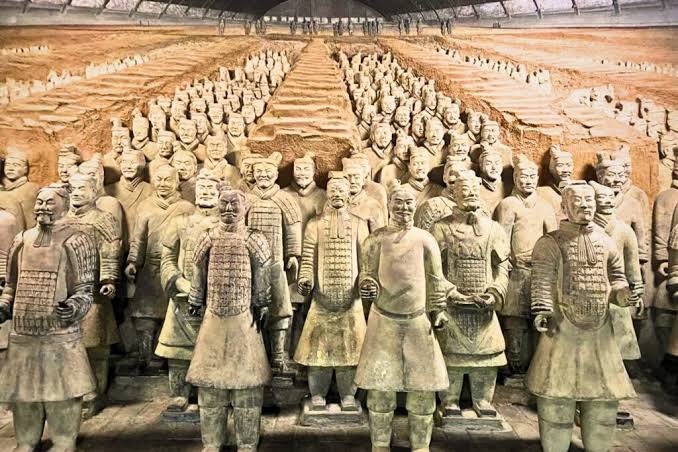 Nothing prepares you for the scale of Pit 1. Photos flatten it into a curiosity; standing in person, it's genuinely overwhelming, thousands of life-sized soldiers, each with an individually sculpted face, standing in battle formation exactly as they were arranged over two thousand years ago to guard Emperor Qin Shi Huang in the afterlife.
A few things worth knowing before you go:
- It's not one pit, it's three. Pit 1 is the famous, massive one you've seen in photos. Pit 2 and Pit 3 are smaller but show ongoing excavation and unpainted, still-buried figures, genuinely fascinating if you're patient.
- The paint is (mostly) gone. The warriors were originally brightly painted; the color oxidized and flaked away within minutes of exposure to air after excavation. A few preserved fragments are on display in the museum halls, seek these out, because they completely change how you picture the original army.
- The emperor's actual tomb is still sealed. It sits under a nearby mound, unexcavated, partly out of respect and partly because archaeologists are still figuring out how to preserve it without destroying it. Historical texts describe rivers of mercury inside and soil samples nearby have actually shown unusually high mercury concentrations, lending some credibility to the old accounts.
- Go early, or go last entry. This site draws over a million visitors a year. By 10 a.m. the crowd noise alone changes the experience. I went back a second time near closing and had entire sections of Pit 3 nearly to myself.
Getting there: The site sits about 40 minutes east of the city center. A taxi or Didi (China's ride-hailing app) is easiest; there's also a public bus (306/游5) from the Xi'an Railway Station that's cheap and reliable if you want the local experience.
The Ancient City Wall
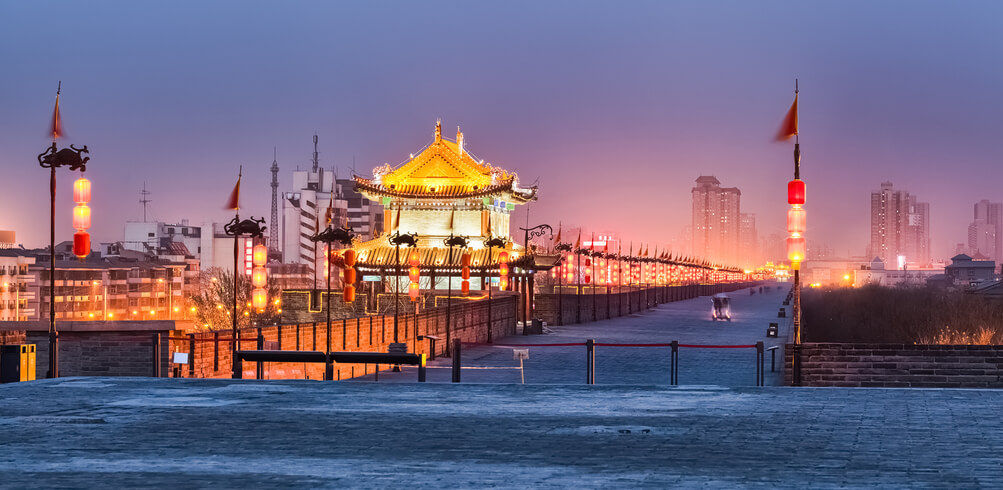
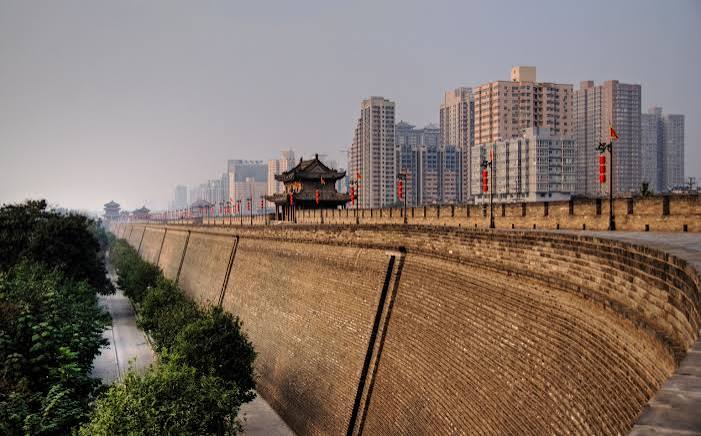 This is my personal favourite thing to do in Xi'an, and it costs almost nothing in comparison to what it gives back. Xi'an's city wall is the best-preserved ancient city wall in China, a complete rectangular loop stretching about 13.7 km (8.5 miles), thick enough that horse-drawn carriages once rode along its top.
You can:
- Rent a bike and ride the entire loop. It takes roughly 1.5 to 2 hours at an easy pace, and there's something quietly moving about pedaling past the same battlements that once held off invading armies.
- Walk a shorter section at sunrise or sunset, when the light hits the watchtowers just right and the crowds thin out.
- Climb one of the four main gate towers - South Gate (Yongning Gate) is the most elaborate, especially if you catch one of the evening light shows or reenactment ceremonies.
The Muslim Quarter (Huimin Jie)
If the Terracotta Army is Xi'an's history lesson, the Muslim Quarter is its living pulse. This isn't a "quarter" in the touristy, roped-off sense, it's a genuine, centuries-old neighborhood where the Hui people, a Chinese Muslim ethnic minority descended from Silk Road traders, have lived and cooked and prayed for generations.
Walking down Beiyuanmen Street at dusk is a full sensory event:
- The smell of cumin and grilling lamb skewers hits you before you even turn the corner.
- The sound of cleavers hammering through mutton and vendors calling out prices creates a kind of chaotic rhythm you fall into without noticing.
- The sight of red lanterns strung overhead, glowing against a darkening sky, while steam rises from dozens of open-air food stalls.
Don't rush through this. Budget at least two hours, ideally over two visits, once in daylight to see the Great Mosque, and once after dark for the food.
The Great Mosque of Xi'an
Tucked away just off the Muslim Quarter's main drag, this is one of the oldest and largest mosques in China, first built during the Tang Dynasty. What throws most visitors is that it doesn't look like a mosque in the way you might expect, no domes, no minarets. It's built in a traditional Chinese pagoda style, with courtyards, carved wooden archways, and calligraphy blending Arabic script with Chinese architectural sensibility. It's a quiet, contemplative pocket in the middle of the quarter's chaos, and honestly one of the most peaceful places I visited in the entire city.
The Big Wild Goose Pagoda
Built in 652 AD to house Buddhist scriptures brought back from India by the monk Xuanzang (yes, the real-life inspiration for the legendary novel Journey to the West), the pagoda itself is a serene, seven-story brick structure you can climb for panoramic views. But the real magic happens in the evening at the North Square fountain show, one of Asia's largest musical fountain displays, set against the illuminated pagoda. It's touristy, sure but it's also genuinely beautiful, and it's free.
Datang Everbright City (Datang Buye Cheng)
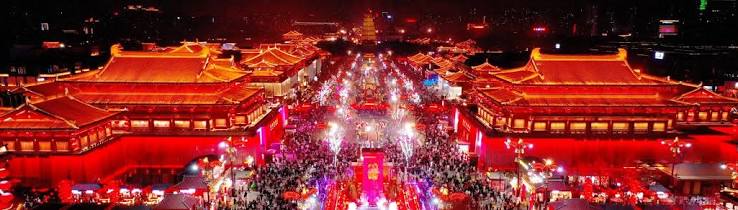 Right next to the Big Wild Goose Pagoda sits one of my favorite surprises in Xi'an, a sprawling pedestrian street built to evoke the grandeur of Tang Dynasty Chang'an, except lit up, modernized, and genuinely alive after dark. Locals just call it "Datang Buye Cheng," which roughly translates to "the Great Tang city that never sleeps," and once the sun goes down, it earns that name.
What makes this place worth your evening:
- Tang-style architecture at night. Wide boulevards lined with reconstructed Tang-era buildings, all lit in warm gold, make for some of the most striking night photography in the city, no filter required.
- Statues and street performers. Bronze statues depicting Tang court life poets, musicians, dancers are scattered along the street, and at certain hours real performers in period costume reenact scenes like the changing of the guard or classical dance, drawing genuine crowds.
- A holographic robot show and light installations pop up seasonally, which sounds gimmicky on paper but is honestly a lot of fun, especially if you're traveling with kids.
- Food and shopping line both sides of the street, from Xi'an snack stalls to trendy dessert shops and bookstores, making it an easy spot to wind down after a long day of temple- and museum-hopping.
It's free to walk through, and it pairs naturally with a Big Wild Goose Pagoda visit, do the pagoda and North Square fountain show in the late afternoon, then let the crowd carry you into Datang Everbright City as the lights come on. It's touristy, unapologetically so, but it's also one of the few places in Xi'an where the ancient capital's image of itself cosmopolitan, dazzling, a little theatrical, feels intentionally, joyfully recreated rather than just excavated.
Shaanxi History Museum
If you want context for everything else you're seeing, come here ideally before the Terracotta Army, not after. It houses over 370,000 relics spanning more than a million years of history, with an especially strong collection of Tang Dynasty artifacts, gold and silver work, and murals from royal tombs. It's free, but you need to reserve a timed ticket in advance (more on that below).
Practical Logistics
Getting There
- By air: Xi'an Xianyang International Airport (XIY) connects to most major Chinese cities and a growing number of international routes. It's about 40-60 minutes from downtown by airport shuttle bus or metro (Line 14 connects directly).
- By high-speed rail: This is genuinely one of the best ways to arrive. Xi'an North Railway Station connects to Beijing (about 4.5 hours), Shanghai (around 6 hours), and Chengdu (roughly 4 hours), and the train experience itself smooth, punctual, scenic is worth savoring.
Best Time to Visit
- Spring (April–May) and autumn (September–October) are the sweet spots, mild temperatures, manageable crowds, and good light for photos.
- Summer (June–August) gets hot and humid, often north of 35°C (95°F), and coincides with peak domestic tourist season, meaning long lines at the Terracotta Army.
- Winter (December–February) is cold and dry but has real charm, fewer tourists, moody grey skies over the wall, and steaming bowls of noodles taste even better in the cold.
Getting Around the City
- The metro system is clean, cheap, and easy to navigate even without Mandarin signage is in English throughout.
- Didi (the local rideshare app) works well; download it and set up payment before you arrive since it's harder to do once you're there without a Chinese phone number in some cases.
- Renting a shared bike (via apps like HelloBike) is fantastic for short hops and for riding the city wall.
Money and Costs
China has moved almost entirely to mobile payment Alipay and WeChat Pay dominate, and many smaller vendors genuinely don't carry change for cash. Set up Alipay's tourist version before your trip if you can; it links to a foreign card and makes daily life dramatically smoother.
Rough daily budget guide (per person):
- Budget traveler: ¥250–400 (~$35–55) - hostel dorm, street food, public transport
- Mid-range: ¥500–900 (~$70–125) - private hotel room, mix of street food and sit-down meals, occasional taxi
- Comfortable: ¥1000+ (~$140+) - boutique hotel, restaurant dining, private transport
Major sights: the Terracotta Army runs about ¥200 for entry (plus optional shuttle/guide fees), the City Wall is around ¥100, and the Shaanxi History Museum is free with a reserved ticket.
Booking Tickets in Advance
This is the one piece of advice I'd underline twice: book the Terracotta Army and the Shaanxi History Museum tickets online in advance, ideally through Ctrip/Trip.com or the official WeChat mini-program. Same-day walk-up lines, especially in high season, can eat hours of your day.
Dress Code and Etiquette
Xi'an is fairly relaxed in terms of dress compared to, say, temples in Southeast Asia, but a few notes:
- At the Great Mosque, dress modestly, shoulders and knees covered is a respectful baseline, especially if entering prayer areas (non-Muslims typically can't enter the actual prayer hall).
- At Buddhist sites like the Big Wild Goose Pagoda, similar modesty applies, and keep your voice down inside temple structures.
- Bargaining is expected and even a bit of a social ritual in the Muslim Quarter's souvenir stalls but not really appropriate in regular restaurants or shops with posted prices.
- A little Mandarin goes a long way. Even a clumsy "xièxiè" (thank you) tends to earn a genuine smile.
The Human Elements: What Xi'an Feels Like
There's a version of Xi'an that exists in guidebooks, dates, dynasties, ticket prices and then there's the version that actually gets under your skin. That second version happens mostly after dark, mostly around food, mostly in moments you can't really plan for.
I remember sitting on a low plastic stool at a stall no bigger than a closet, watching an older man knead dough for biang biang noodles, slapping it against the counter with a sound like a whip crack, over and over, until it stretched into a single wide, chewy ribbon. He didn't speak English, I didn't speak much Mandarin, and none of that mattered, he just held up the bowl, grinned, and gestured for me to add more chili oil.
Food You Actually Need to Try
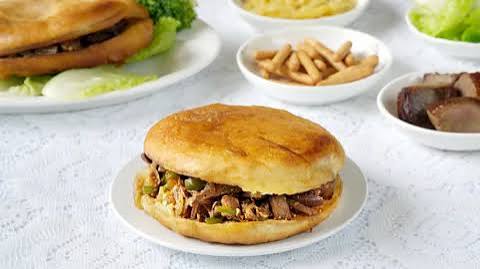
- Roujiamo - Often called "Chinese hamburger," it's slow-braised, deeply spiced pork or beef or lamb stuffed into a crisp-on-the-outside, chewy-on-the-inside flatbread. Cheap, filling, and borderline addictive.
- Biang Biang Noodles - Named for the sound the dough makes when slapped on the table, these are impossibly wide, hand-pulled noodles usually tossed with chili oil, vinegar, garlic, and vegetables.
- Yang Rou Pao Mo - A Xi'an specialty: unleavened bread that you tear into small pieces yourself, which are then simmered in a rich, slow-cooked lamb broth. There's a whole ritual to the tearing, and locals will absolutely notice if your pieces are too big.
- Liangpi - Cold, chewy rice or wheat noodles tossed with chili oil, vinegar, and crunchy vegetables, perfect for hot afternoons.
- Persimmon Cakes (Shibing) - A sweet, chewy pastry made from local Xi'an persimmons, especially good in autumn when the fruit is in season.
Sounds, Smells, and Small Moments
Xi'an announces itself before you see it. The smell of cumin and charcoal smoke from lamb skewers drifting through the Muslim Quarter. The rhythmic clang of cleavers against wooden chopping blocks. The low murmur of Shaanxi dialect, which has its own distinct cadence, sharper and more clipped than standard Mandarin.
There's also a quieter Xi'an, the sound of tai chi practitioners in the pre-dawn parks, the shuffle of elderly residents playing mahjong on fold-out tables near the wall, the particular hush that falls over the Great Mosque's courtyard even as the streets outside stay loud. Both versions of the city are equally real, and you need both to actually understand the place.
A Simple Suggested Itinerary
Day 1 - Old City Core Morning at the Shaanxi History Museum for context, afternoon walking or biking the City Wall, evening in the Muslim Quarter for dinner and the Great Mosque.
Day 2 - The Terracotta Army Full day trip east of the city. Go early. Consider combining it with the nearby Huaqing Palace hot springs if you have energy left.
Day 3 - Pagodas and Parks Morning at the Big Wild Goose Pagoda, afternoon exploring smaller neighborhoods or the Bell and Drum Towers, evening at the North Square fountain show followed by a stroll through Datang Everbright City as it lights up.
If you have a fourth day, consider a half-day trip to Mount Huashan, one of China's Five Great Mountains, known for its dramatic cliffside plank walks, not for the faint of heart, but unforgettable.
Final Thoughts From the Wall
What stays with me about Xi'an isn't really any single monument, it's the sensation of standing somewhere genuinely ancient that hasn't been frozen in amber. The city wall isn't a relic behind glass; people jog on it every morning. The Muslim Quarter isn't a recreated "historic district"; families have lived and cooked there for generations. Even the Terracotta Army, static as it is, keeps revealing new pits and new questions as excavation continues.
Xi'an rewards travelers who slow down enough to notice the layers, the Tang poetry etched into a temple wall, the particular way lamb fat sizzles on a skewer, the quiet nod from a noodle vendor who's made the same dish ten thousand times and still seems to care about getting it right. Go for the warriors. Stay for everything else.